Demystifying The Online Economy: A Beginner’s Guide To Earning
The online economy isn’t just a buzzword—it’s a thriving, constantly evolving marketplace where anyone can earn, build wealth, and achieve financial freedom. From the rise of e-commerce platforms and remote work to the explosive growth of cryptocurrency and artificial intelligence, the digital economy is rewriting the rules of how we work and make money.
By 2025, the landscape has shifted even more dramatically. What started as simple online shopping and freelancing has evolved into complex ecosystems that offer unlimited earning potential for those willing to dive in. Whether you’re exploring side hustles, building a full-time digital business, or looking for high-paying remote jobs, this guide will walk you through how to position yourself for success in the new economy.

What Is the Online Economy—and Why Should You Care?
The online economy, also known as the digital economy, encompasses all economic activities that happen over the internet. This includes online shopping, selling digital services, remote working, cryptocurrency transactions, affiliate marketing, and investing in digital assets.
But why should you care? Because the online economy is no longer a “nice-to-have” income option—it’s become a necessity for those looking to diversify their income, escape the 9-to-5 grind, or build long-term wealth. And the best part? You don’t need to be a tech genius to get started.
Key Drivers of the Online Economy
- E-Commerce Dominance: Platforms like Amazon, Shopify, and Etsy have made it easier than ever to start selling products online—physical or digital.
- The Rise of Cryptocurrency: Bitcoin, Ethereum, and other altcoins are becoming mainstream financial instruments.
- AI and Automation: Businesses use artificial intelligence to streamline operations and improve customer experiences.
- Remote Work Boom: Companies are hiring talent from across the globe, opening up remote roles in tech, marketing, finance, and more.
- Content Creation and Digital Services: YouTube, TikTok, and online coaching platforms are turning everyday people into full-time creators and educators.
Real-World Examples: How The Online Economy Changes Lives
- Amazon has evolved from a bookstore to a global leader in logistics, setting the gold standard for e-commerce and delivery speed.
- Coinbase brought cryptocurrency investing into the mainstream, allowing everyday people to build wealth through digital assets.
- Upwork and Fiverr connect freelancers with clients worldwide, providing new ways to monetize skills.
- Zoom transformed remote work into a viable, long-term business model, giving rise to global remote-first companies.
These examples prove that anyone—from stay-at-home parents to young entrepreneurs—can build a profitable career in the digital space.

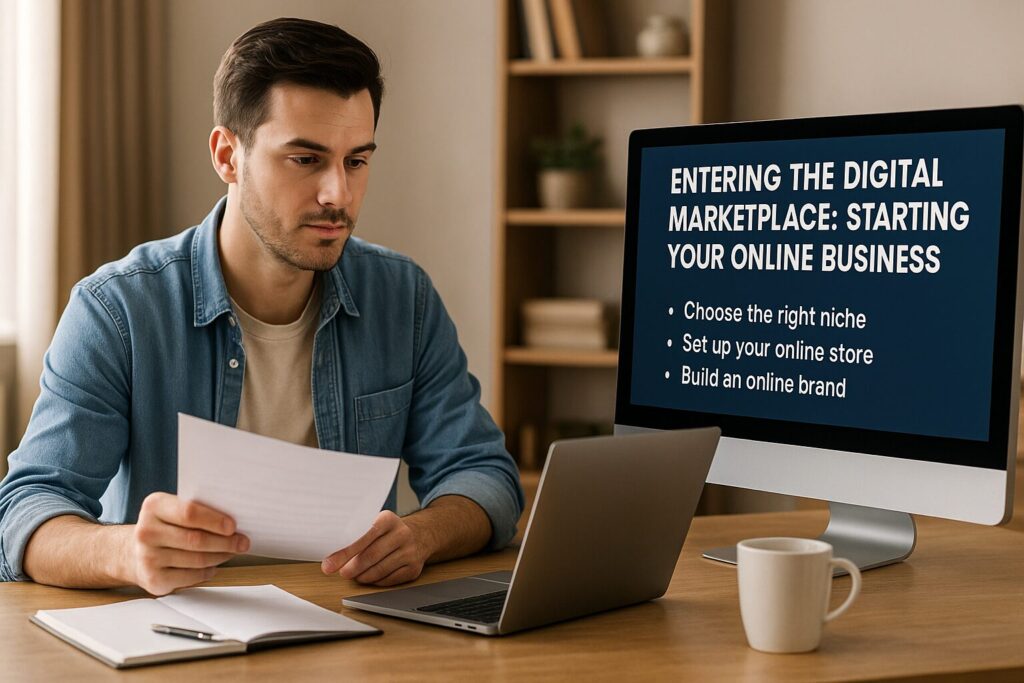
How to Enter the Digital Marketplace: Start Your Online Business Today
Starting an online business may feel overwhelming at first, but it’s never been easier thanks to modern tools and platforms.
1. Find Your Profitable Niche
The most successful online businesses focus on solving specific problems.
- Research trending topics using Google Trends and social media platforms.
- Find the intersection between your interests and market demand.
- Validate your idea by exploring forums like Reddit and Quora to see if people are actively looking for solutions.
Hot Niches in 2025:
- AI-Powered Tools and Services
- Health and Wellness Coaching
- Remote Work Productivity Products
- Sustainable and Eco-Friendly Products
- Digital Education and Online Courses
2. Choose the Right Platform
Your business model will determine the best platform for your products or services:
- Shopify & WooCommerce: For physical and digital product sales.
- Etsy: For handmade, vintage, or artistic products.
- Amazon FBA: For selling products with Amazon handling fulfillment.
- WordPress/Wix: To build a custom website for services or a personal brand.
3. Build a Standout Online Brand
In a saturated market, branding isn’t optional—it’s the key to long-term success.
- Develop a memorable logo and consistent color palette.
- Tell a compelling brand story that connects emotionally with your audience.
- Be present on social media platforms where your ideal customers spend time.
Example:
Gymshark started as a small online fitness brand and grew into a billion-dollar company by building a strong community on Instagram and collaborating with fitness influencers.
4. Launch Smart, Scale Fast
Start small with a minimum viable product (MVP). Focus on getting customer feedback and improving your offer before going all in.
- Use Google Analytics and Hotjar to study user behavior.
- Collect email addresses from day one and use email marketing tools like Mailchimp or ConvertKit.
- Scale your ad spend once you’ve validated your offer through organic marketing.
Capitalizing on Trends: Leverage Technology to Skyrocket Your Growth
Staying ahead of tech trends is no longer a luxury—it’s a survival strategy.
1. Use Artificial Intelligence to Streamline Operations
- Automate customer service with AI-powered chatbots.
- Create high-quality content faster using AI writing tools like Jasper or ChatGPT.
- Personalize marketing campaigns based on user behavior and analytics.
2. Tap Into Cryptocurrency and Blockchain
- Accept crypto payments to reach a broader, tech-savvy customer base.
- Explore blockchain for transparent and secure transaction records.
- Stay updated on decentralized finance (DeFi) trends for new investment opportunities.
3. Go Mobile-First
Over 60% of online purchases now happen on mobile devices. If your website isn’t mobile-optimized, you’re losing sales.
- Ensure fast load times and a seamless checkout experience on smartphones.
- Develop mobile apps or use Progressive Web Apps (PWAs) to improve customer retention.
4. Partner with Influencers and Create Authentic Content
- Find influencers who share your brand’s values and have loyal followings.
- Focus on relatable storytelling over traditional advertising.
- Leverage platforms like TikTok, YouTube, and Instagram Reels for viral content opportunities.
Navigating the Challenges of the Online Economy
The digital economy offers incredible earning potential—but it’s not without risks.
1. Cybersecurity Is Non-Negotiable
- Use encrypted payment gateways like Stripe or PayPal.
- Require two-factor authentication for business accounts.
- Regularly back up your website and data.
2. Prioritize Data Privacy
Customers care about how their information is handled. Be transparent with your privacy policies and ensure compliance with regulations like GDPR and CCPA.

3. Plan for Scalability
- Invest in cloud hosting solutions like AWS or Google Cloud.
- Automate your order fulfillment and customer support wherever possible.
- Create standard operating procedures (SOPs) to streamline operations as you grow.
4. Understand Legal and Tax Responsibilities
- Consult a tax professional experienced in online businesses.
- Keep thorough financial records and understand your reporting obligations.
- Protect your intellectual property through trademarks or copyrights.
Beginner’s Quick-Start Action Plan
- Identify a Niche You’re Passionate About.
- Validate Market Demand Before You Build.
- Select the Right Platform for Your Products or Services.
- Invest in Branding and Content Marketing.
- Start Small, Test, and Iterate Quickly.
- Stay Current on Trends and Technology.
- Scale Your Business Through Automation and Outsourcing.
Final Thoughts: Will You Watch the Online Economy or Join It?
The digital economy is already changing lives. The question isn’t whether there’s opportunity—it’s whether you’re ready to take action and claim your share.
Whether you’re interested in starting an online business, becoming a freelancer, trading cryptocurrency, or creating digital products, the path to earning online is wide open.
So, what’s your next move? Will you become a digital spectator—or a digital entrepreneur?

Larry Mac
Hi there, and thanks for stopping by! My name is Larry, and I’m the voice behind 6fig.com. I search the Internet to try and find Money making opportunities to share.. Thanks for stopping by, feel free to subscribe and comment. Thank You!
You Got This, I Learned these skills and More at Wealthy Affiliate. Hey if this 65 year old Grandfather can make money online, you can too!
This website got me on the path to making money online! Click Here to Start!